You keep Instagram updated. You answer messages between appointments. Yet someone looking for your service may start with a question in ChatGPT and never see those posts.
For Australian small business owners, that creates another place to check: can customers find clear, reliable information about your business through AI search?
At Lavish Beauty by Rania, a Sydney beauty clinic we work with, Google Analytics 4 recorded 34 ChatGPT referral sessions and 11 online booking-link clicks over 12 complete months. The numbers are small. They show an observable customer discovery channel worth measuring.
AI search is becoming part of consumer decisions
Customers can use an AI assistant to compare services, clarify a concern or shortlist nearby businesses before visiting a website.
McKinsey’s October 2025 research reported that half of a representative panel of 1,927 US consumers intentionally used AI-powered search. The survey was conducted in August 2025. This is US evidence, rather than an Australian adoption rate. Read McKinsey’s AI search research.
Adobe also observed actual website visits. During 1 November–31 December 2025, generative AI referral traffic to US retail sites rose 693.4% year on year. Adobe said the user base remained modest. This measures visits from AI links, rather than growth in completed purchases. Read Adobe’s holiday shopping report.
These findings suggest that AI is taking a larger role in discovery and comparison. They do not predict the result for a Sydney salon, an accountant or a local retailer. That needs evidence from the business itself.
Social media has an access blind spot
Instagram, Facebook and other social platforms remain useful places to show your work and build relationships. The difficulty comes when essential service information exists only in posts, private groups or content behind a login.
Google’s technical requirements say publicly accessible pages are needed for crawling; Googlebot cannot access pages that require a login. That supports a specific concern about access, rather than a claim that all social content is invisible. Google’s crawling requirements.
Some public social posts can appear in search. Access also varies between AI systems and platforms. Your own website gives you control over how your services, location and booking details are published.
For example, a clinic might explain appointment suitability in an Instagram caption. Publishing that explanation on the relevant service page gives prospective customers a stable place to check it. Social posts can then point to that page.
Lavish Beauty: measurable ChatGPT referrals in Sydney
Lavish Beauty by Rania is a beauty clinic in Auburn, Sydney. Its website brings service information, educational articles and a Timely online booking entry together. Our work includes website content and search visibility. See our Lavish Beauty project.
Over October 2025–September 2026, the production website recorded 34 ChatGPT referral sessions and 11 booking-link clicks in GA4.
AI referrals and booking interest
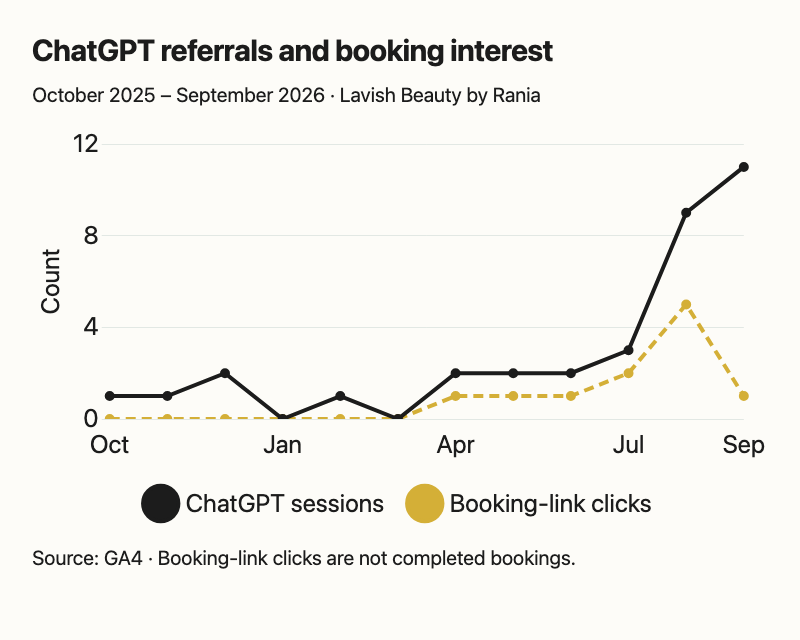
Source: Lavish Beauty’s GA4 records, Sydney timezone. Published with permission. Only ChatGPT was observed among the identifiable AI sources checked.
The later months show more ChatGPT visits. Booking interest fluctuates, and a subsequent rolling-period check also recorded fewer sessions. The sample is small, so these results need ongoing measurement.
Google search visibility
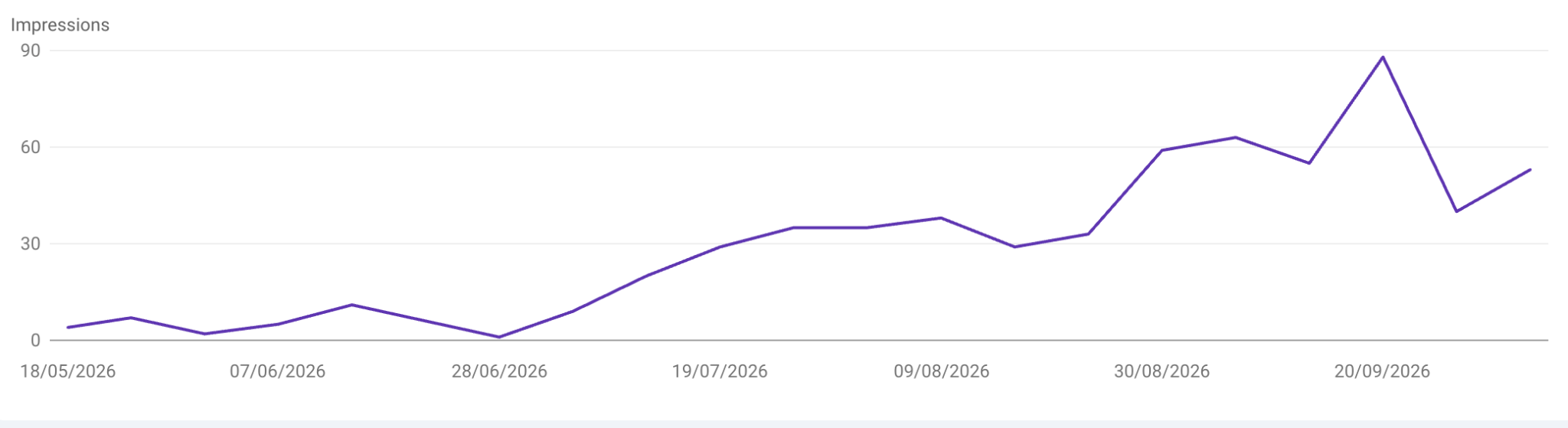
Source: Google Search Console, client-provided screenshot. The displayed period starts on 18 May 2026; the final date is not labelled. Impressions measure appearances in Google search results. This chart does not isolate AI agent exposure.
Search impressions were generally higher later in the displayed period. Together, the charts show two observable parts of discovery: visibility in Google search and visits attributed to ChatGPT. They measure different activity and do not establish a causal effect of GEO.
We use these figures to guide further improvements and track the path from discovery to booking.
GEO and SEO: give customers information they can check
SEO means search engine optimisation. GEO means generative engine optimisation, a term used for work aimed at visibility in AI-generated answers. Both benefit from useful, accurate public content.
Google says its existing SEO fundamentals apply to AI Overviews and AI Mode. It does not require special AI markup or additional technical requirements. This guidance applies to Google’s features; other platforms have their own access rules. Google’s AI website guidance.
For a local service business, start with the questions people ask before booking. Explain the service, who it is for, where you operate, relevant limitations and the next step. Keep the business details consistent with your public listings.
This gives customers a clearer basis for choosing you. It also gives search and AI tools information they may retrieve. Rankings, citations and recommendations remain outside a website owner’s control.
Four useful steps for Australian small businesses
- Check your service pages. Make sure a first-time visitor can find your location, services, opening details and contact or booking entry on a phone. Our website design service starts with that customer journey.
- Publish answers to real questions. Use questions from enquiries and appointments. Explain comparisons and constraints with evidence. Avoid generic articles written only to repeat keywords.
- Connect social content to your website. Turn useful posts into accurate, maintained service information. Link customers to the page where they can read more or book.
- Track the outcome beyond the click. Review identifiable AI sources in GA4. Compare sessions with enquiries and booking-link clicks. Connect completed booking records where available before reporting conversion or revenue.
Questions small business owners ask about AI search
How can my business get found on ChatGPT?
Publish accurate, accessible service information and keep it current. Check the platform’s crawler access requirements when reviewing your site. These steps support discoverability, but they cannot guarantee a ChatGPT recommendation.
Does GEO replace local SEO?
Maintain your local SEO foundations while assessing AI visibility. Customers still need reliable location and service details. For Google’s AI search features, the usual SEO guidance continues to apply.
Is Instagram enough for a local business?
It can be an effective source of enquiries. A website adds a public place for detailed service information and a direct booking path. The channels can support each other.
Make your next customer easier to reach
If your service details are scattered across posts, start by bringing them together on your website. Then measure whether visitors reach your enquiry or booking entry.
Coco Software works with Australian small businesses on website design, SEO and GEO. We can review the information customers need and identify gaps in the path to an enquiry. Get in touch.
For the broader website strategy, read Why Your Website Matters More in the AI Era.